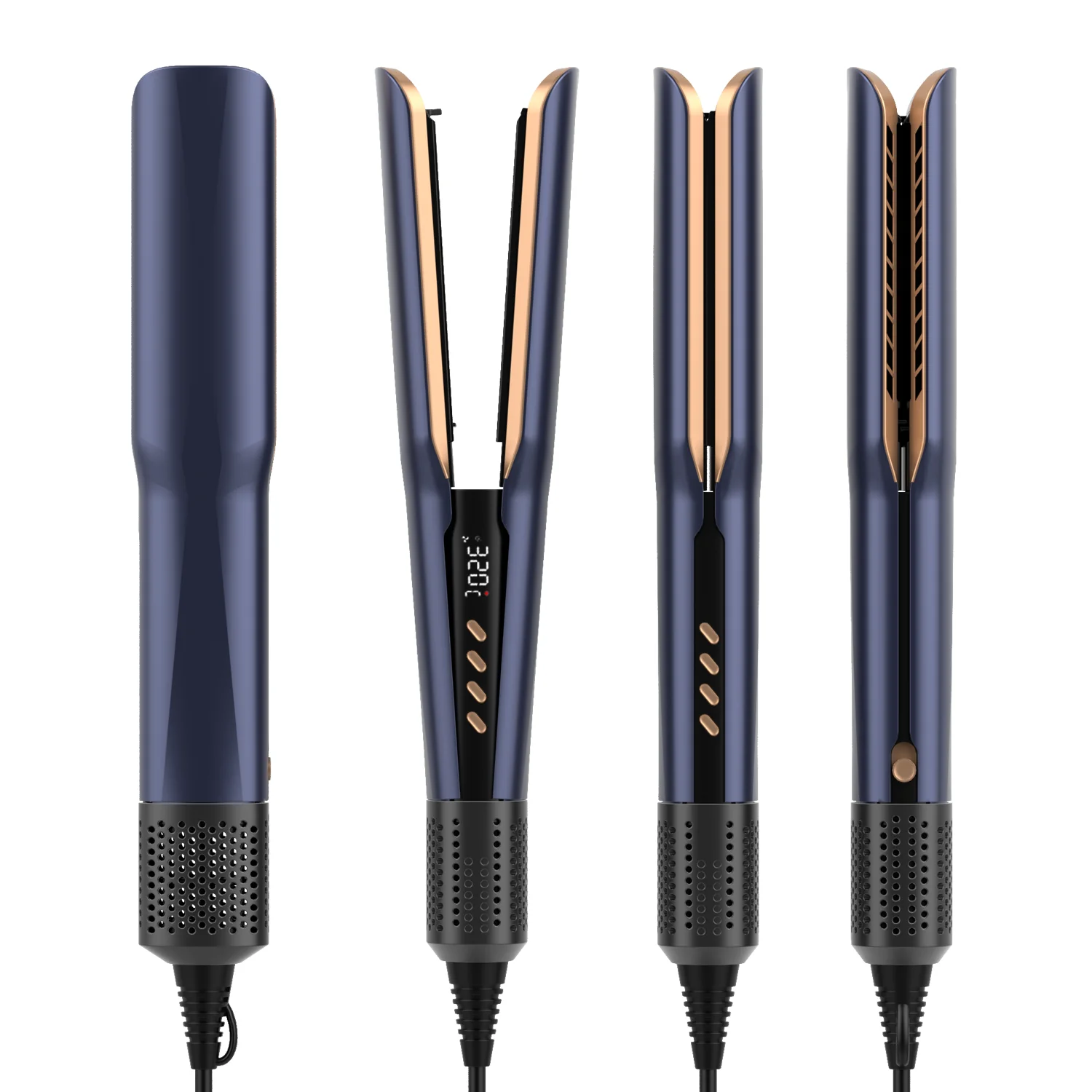
Professional Air Straightener Solutions - Advanced Flow Conditioning Technology for Industrial Applications

Get a Free Quote

Our representative will contact you soon.
Email
Name
Company Name
Message
0/1000

air straightener

An air straightener represents a cutting-edge industrial device designed to optimize airflow patterns and eliminate turbulence in various pneumatic systems. This sophisticated equipment functions as a critical component in applications where smooth, laminar airflow is essential for operational efficiency and product quality. The air straightener achieves its primary purpose through a series of precisely engineered internal structures that guide chaotic air currents into uniform, directional streams. Modern air straightener units incorporate advanced aerodynamic principles to transform irregular airflow into consistent patterns that enhance overall system performance. The device operates by utilizing honeycomb structures, perforated plates, or specialized vane assemblies that condition incoming air streams. These technological components work in harmony to reduce velocity variations, pressure fluctuations, and directional inconsistencies that commonly occur in industrial air handling systems. The air straightener finds extensive applications across multiple industries, including manufacturing facilities, HVAC systems, wind tunnels, and laboratory environments where precise airflow control is paramount. In manufacturing settings, the air straightener ensures consistent air distribution for drying processes, cooling operations, and material handling systems. Research facilities rely on air straightener technology to maintain controlled environmental conditions for accurate testing and measurement procedures. The device proves particularly valuable in applications involving sensitive measurements, where even minor airflow disturbances can compromise results. Additionally, the air straightener plays a crucial role in energy conservation by optimizing airflow efficiency and reducing pressure losses throughout the system. Its robust construction typically features corrosion-resistant materials that withstand harsh operating conditions while maintaining long-term reliability. The air straightener design accommodates various installation configurations, making it adaptable to existing infrastructure without requiring extensive modifications.

New Products

The air straightener delivers substantial operational benefits that directly impact productivity and cost-effectiveness across numerous applications. Users experience immediate improvements in system efficiency when implementing an air straightener, as the device eliminates energy waste caused by turbulent airflow patterns. This enhanced efficiency translates to reduced operating costs through lower energy consumption and decreased maintenance requirements. The air straightener creates uniform velocity profiles that optimize downstream equipment performance, extending the lifespan of fans, blowers, and other air handling components. Organizations benefit from improved product quality when using an air straightener in manufacturing processes, as consistent airflow ensures uniform drying, cooling, and coating applications. The device significantly reduces noise levels generated by turbulent air movement, creating a more comfortable working environment while meeting occupational safety standards. Installation of an air straightener typically requires minimal downtime and integrates seamlessly with existing systems, allowing businesses to realize benefits without disrupting operations. The technology proves cost-effective through its durable construction and low maintenance requirements, providing years of reliable service with minimal intervention. Quality control processes benefit substantially from air straightener implementation, as the device eliminates flow variations that can cause measurement errors or product defects. Testing laboratories achieve more accurate results when utilizing an air straightener, as the stable airflow conditions reduce external variables that could influence sensitive instruments. The air straightener also contributes to environmental sustainability by optimizing energy usage and reducing carbon footprints associated with inefficient air handling systems. Facilities using an air straightener often experience improved temperature control and air quality, creating better working conditions for personnel while maintaining optimal operating parameters for equipment. The device provides excellent return on investment through energy savings, reduced maintenance costs, and improved process reliability. Companies implementing air straightener technology frequently report decreased warranty claims and customer complaints related to product quality issues caused by inconsistent airflow conditions.

Practical Tips

Zexi to Showcase Innovative Hair Styling Appliances at ZUCHEX 2025 in Istanbul

09

Oct

Zexi to Showcase Innovative Hair Styling Appliances at ZUCHEX 2025 in Istanbul

View More
Zexi to Participate in CoCreate 2025 – USA, Showcasing Professional Hair Styling Tools in Las Vegas

12

Sep

Zexi to Participate in CoCreate 2025 – USA, Showcasing Professional Hair Styling Tools in Las Vegas

View More
Zexi Shines at Beauty & Care İstanbul 2025, Showcasing Innovative Hair Styling Tools

12

Sep

Zexi Shines at Beauty & Care İstanbul 2025, Showcasing Innovative Hair Styling Tools

View More

Get a Free Quote

Our representative will contact you soon.
Email
Name
Company Name
Message
0/1000

air straightener

Advanced Flow Conditioning Technology

Advanced Flow Conditioning Technology

The air straightener incorporates state-of-the-art flow conditioning technology that transforms chaotic airflow into perfectly organized streams through innovative engineering design. This sophisticated system utilizes precision-manufactured honeycomb cores or specialized vane arrangements that guide air particles along predetermined paths, eliminating cross-currents and velocity variations that typically plague industrial air systems. The air straightener technology employs aerodynamic principles derived from aerospace applications, ensuring optimal performance across varying operational conditions. Each air straightener unit features carefully calculated cell dimensions and geometric configurations that maximize flow uniformity while minimizing pressure losses. The advanced materials used in air straightener construction resist corrosion, temperature extremes, and chemical exposure, guaranteeing long-term performance reliability. This flow conditioning capability proves essential in applications requiring precise environmental control, such as pharmaceutical manufacturing, electronics production, and scientific research facilities. The air straightener eliminates hot spots, dead zones, and turbulent regions that can compromise product quality or measurement accuracy. Industries utilizing air straightener technology report significant improvements in process consistency and output quality. The device effectively handles high-volume airflow applications while maintaining exceptional conditioning performance throughout varying load conditions. Research and development teams have continuously refined air straightener designs to accommodate emerging industrial requirements and environmental regulations. The technology adapts to different installation environments, from compact laboratory settings to large-scale industrial facilities. Users appreciate how the air straightener integrates with existing control systems, providing real-time monitoring capabilities and automated performance optimization. This advanced flow conditioning technology represents a critical investment for organizations prioritizing operational excellence and competitive advantage in their respective markets.
Energy Efficiency and Cost Reduction

Energy Efficiency and Cost Reduction

The air straightener delivers exceptional energy efficiency benefits that substantially reduce operational costs while enhancing overall system performance across diverse industrial applications. By eliminating turbulence and creating laminar flow conditions, the air straightener significantly decreases the energy required to move air through ductwork and equipment systems. This efficiency improvement typically results in measurable reductions in electricity consumption, with many facilities reporting energy savings of fifteen to thirty percent after air straightener installation. The device achieves these savings by reducing pressure losses that force fans and blowers to work harder, thereby consuming more energy to maintain desired airflow rates. Organizations implementing air straightener technology often discover that existing equipment can handle increased capacity without requiring upgrades, deferring capital expenditures while meeting growing operational demands. The energy efficiency benefits of an air straightener compound over time, providing substantial cumulative savings that justify the initial investment within months of installation. Maintenance costs decrease significantly when using an air straightener, as the uniform airflow reduces wear and tear on downstream equipment components. The device prevents the formation of hot spots and pressure imbalances that typically cause premature component failure in air handling systems. Facilities utilizing air straightener technology report extended intervals between routine maintenance procedures and reduced frequency of emergency repairs. The consistent operating conditions created by an air straightener help maintain optimal equipment performance throughout extended operational cycles. Energy auditors frequently recommend air straightener implementation as a cost-effective measure for achieving sustainability goals and regulatory compliance requirements. The device contributes to green building certifications and environmental stewardship initiatives while delivering tangible financial benefits. Companies investing in air straightener technology often experience improved competitiveness through reduced operating costs and enhanced operational reliability that supports increased production capacity.
Versatile Installation and Applications

Versatile Installation and Applications

The air straightener demonstrates remarkable versatility through its adaptable design that accommodates diverse installation requirements and application scenarios across multiple industries and operational environments. This flexibility makes the air straightener suitable for retrofitting existing systems or incorporating into new construction projects without requiring extensive infrastructure modifications. Engineers appreciate how the air straightener can be customized to fit specific dimensional constraints while maintaining optimal performance characteristics. The device adapts to various duct sizes, configurations, and airflow velocities, ensuring effective operation regardless of installation parameters. Manufacturing facilities utilize air straightener technology in paint booths, drying chambers, and clean room environments where consistent airflow is critical for product quality and regulatory compliance. Research laboratories depend on air straightener performance for wind tunnel testing, environmental chambers, and precision measurement applications requiring stable atmospheric conditions. The air straightener proves equally effective in commercial HVAC systems, improving comfort levels and energy efficiency in office buildings, hospitals, and educational institutions. Data centers benefit from air straightener implementation through improved cooling efficiency and equipment reliability that supports critical computing operations. The device handles aggressive chemical environments, high temperatures, and corrosive atmospheres through specialized material selections and protective coatings. Installation teams find the air straightener easy to integrate with existing monitoring systems, providing real-time performance feedback and automated control capabilities. The technology scales effectively from small laboratory applications to large industrial installations without compromising performance standards. Maintenance personnel appreciate the accessible design features that simplify inspection, cleaning, and component replacement procedures. The air straightener supports both horizontal and vertical installations, accommodating space constraints and architectural requirements. Industries ranging from food processing to aerospace manufacturing rely on air straightener technology to maintain consistent operating conditions that ensure product quality and regulatory compliance while optimizing operational efficiency and reducing long-term maintenance requirements.

Get a Free Quote

Our representative will contact you soon.
Email
Name
Company Name
Message
0/1000